


Sunny Health AquaStrive Smart Water Rower vs Concept2 RowErg: Which Foldable Rower Fits Your Apartment?
Updated: Mar 26, 2026
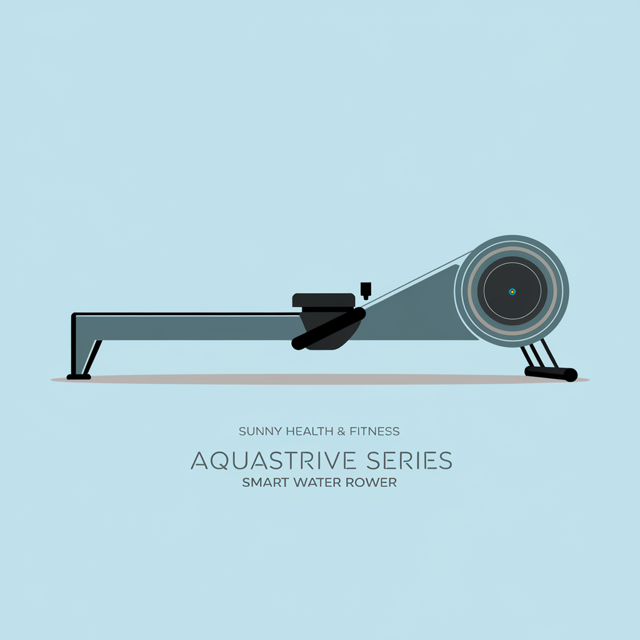
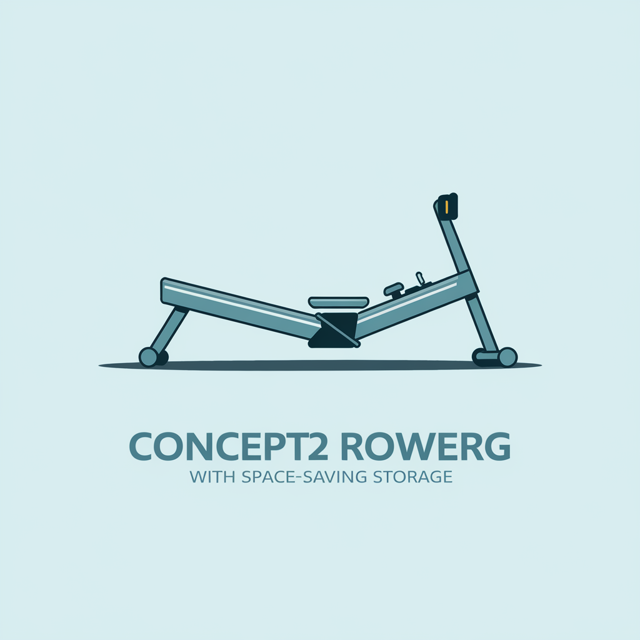
| Specification | Sunny Health & Fitness AquaStrive Series Smart Water Rower | Concept2 RowErg (Model D) |
|---|---|---|
| Resistance Type | Water + Magnetic hybrid (16 levels) | Air resistance, infinite scaling |
| Noise Level | Moderate (water swoosh + magnetic hum) | Moderate-loud (fan whoosh, 74-85 dB) |
| Dimensions | 82" x 19" x 22" | 96" x 24" x 14" |
| Stored Size | 43" x 19" x 53" (folds vertically) | 25" x 33" x 54" (splits in two pieces) |
| Weight | ~63 lbs (without water) | 57 lbs |
| Max User Weight | 300 lbs | 500 lbs |
| Slide Rail Length | ~48" inseam | 54" monorail (38" max inseam) |
| Monitor | LCD (time, distance, calories, stroke rate) | PM5 (splits, watts, stroke rate, HR, distance) |
| App Connectivity | Bluetooth to free SunnyFit app | Bluetooth + ANT+ (ErgData, Strava, Zwift) |
| Warranty | 3-year frame, 180-day parts | 5-year frame, 2-year parts |
What the Community Says
Sunny Health & Fitness AquaStrive Series Smart Water Rower
The hybrid water + magnetic resistance is a clever design at this price point. The water tank provides a natural rowing feel while magnetic tension adds adjustability. At $455, it's less than half the cost of a Concept2.
Very limited user reviews and long-term durability data. The LCD monitor is basic with inaccurate metrics, Velcro foot straps have been reported to degrade within months, and the monitor lacks a backlight.
Budget-conscious beginners who want the water rowing experience at an entry-level price and won't need the machine to last more than 2-3 years.
Concept2 RowErg (Model D)
Proven durability spanning decades, universally accurate performance data, and the best storage mechanics of any rower: tool-free separation into two compact pieces that genuinely fit in a closet.
The air resistance is the loudest option in this comparison. At $990, it costs more than twice the AquaStrive. The industrial aesthetic won't blend into any living space.
Anyone planning to row consistently for years, wanting accurate data to track progress, or needing a machine with proven reliability and excellent resale value.
The $455 Question: Is the Budget Water Rower Worth It?
This comparison exists because someone searching for apartment-friendly rowing machines will inevitably see the Sunny Health AquaStrive at half the price of a Concept2 and wonder what the catch is.
There is a catch. Actually, several catches. But there's also a genuine case for the cheaper machine depending on where you are in your rowing journey. This page breaks down exactly when each option makes sense.
What You're Actually Getting for $455
The Sunny Health AquaStrive uses a hybrid resistance system -- water and magnetic combined. The water tank holds water at a 60-degree angle with 16 hydro blades, and 16 levels of magnetic resistance are layered on top. In theory, this gives you the satisfying water swoosh that makes water rowers feel natural, plus the adjustability of a magnetic system.
At $455, it's significantly cheaper than standalone water rowers like the WaterRower ($1,199) or the Concept2 ($990). Sunny Health is a well-established budget fitness brand -- they've been making affordable home gym equipment for years and carry an A+ rating with the BBB.
The free SunnyFit app connects via Bluetooth and includes over 1,000 trainer-led workouts, virtual scenic tours, and basic progress tracking. No subscription required, which is a genuine advantage over machines like the Hydrow ($50/month) or Echelon ($35/month).
The Limited Review Problem
Here's what makes me cautious about recommending the AquaStrive to apartment dwellers who need reliability: there isn't much long-term user data.
Reddit's rowing communities are largely silent on this specific model. When a rowing machine doesn't generate much discussion in forums where people obsessively compare equipment, it usually means one of two things -- either nobody's buying it, or the people who buy it aren't serious enough about rowing to participate in forums. Neither is inherently bad, but it means we're working with limited real-world feedback.
The reviews that do exist on Amazon and the Sunny Health website are generally positive but surface-level. Buyers praise the price and the look of the water tank. A few specific complaints stand out:
-
The monitor doesn't illuminate. Multiple reviewers mention the LCD screen is hard to read without a backlight, especially in lower-light conditions common in apartments where you might be rowing near a window rather than under gym lighting.
-
Velcro foot straps degrade. One detailed Amazon review documented the straps "absolutely fell apart after six months," calling them "a critical component" that rendered the machine frustrating to use. Sunny's customer service sent replacements, but the reviewer noted the replacements were "of a very low quality -- not the same high-quality nylon straps the rower shipped with."
-
Water maintenance is real. The tank needs purification tablets to prevent algae growth. It's a minor chore, but it's ongoing and something the Concept2 doesn't require at all.
The Concept2 at Twice the Price: What the Money Buys
At $990, the Concept2 RowErg costs more than double the AquaStrive. Whether that's worth it depends entirely on your time horizon.
If you plan to row for 2 years or less: The AquaStrive's cost advantage is real and significant. Even if it needs replacing after 2-3 years, you've spent $455 versus $990. You could buy two AquaStrives over four years and still come out ahead financially.
If you plan to row for 3+ years: The Concept2 math starts winning fast. Machines from the 1990s are still in daily use. Replacement parts for everything are available and affordable. A five-year-old Concept2 sells for $700-850 used. The AquaStrive's resale value? Nobody knows, because the secondary market barely exists for budget water rowers.
The PM5 monitor is the real differentiator for people who want to track fitness progress. Every metric is universally comparable -- your 500m split, your watts, your stroke rate all mean the same thing across every Concept2 in the world. The AquaStrive's LCD cycles through basic metrics (time, distance, calories, strokes) that give you a general sense of effort without the precision that makes data useful for training.
Garage Gym Reviews gave the Concept2 a build quality score of 10/10 in their updated 2026 review. They gave Sunny Health magnetic rowers in this price range around 3.8/5, noting "quite a few pieces on the machine constructed with plastic" and flagging the foot cradles and flywheel housing as components likely to degrade.
Storage for Small Apartments: Both Actually Work
This is where the comparison gets more balanced.
The AquaStrive folds vertically, taking up about 43 x 19 inches of floor space when stored. At roughly 63 pounds (without water in the tank), one person can manage the fold. It's compact enough for a corner, a closet, or alongside a wall. The water tank needs to be drained if you want to move the machine between rooms regularly, which adds friction to the process.
The Concept2 doesn't fold, but it separates into two pieces via a tool-free framelock. Each piece is manageable at 57 pounds total, and the components are sized to fit into closets, behind doors, or under beds. In practical apartment testing, the Concept2's split-and-store takes under 45 seconds and works in tighter spaces than the AquaStrive's folded profile.
The AquaStrive is 14 inches shorter during use (82 vs 96 inches). In a studio apartment where every foot of floor space matters, that's a genuine advantage. The Concept2 needs 8 feet of clearance to operate, which eliminates some room configurations.
Noise: Neither Is Whisper-Quiet
Some apartment buyers assume water rowers are automatically silent. They're not.
A well-built water rower produces a pleasant swooshing sound that most people find less annoying than mechanical noise. But a poorly-built water rower can add plastic creaking, inconsistent water sloshing, and structural vibrations to the mix. The AquaStrive falls somewhere in between -- the water sound is pleasant, but several reviewers mention minor structural sounds during use.
The Concept2's fan noise is predictable and consistent. Annoying? Possibly. But you know exactly what you're getting. At moderate effort, it sits around 74 dB. At peak effort, 85+ dB. A rubber mat underneath reduces floor-transmitted vibration meaningfully.
For apartment suitability specifically, neither machine is as quiet as an electromagnetic rower like the Hydrow Wave or MERACH. If silence is your absolute top priority, both of these are compromise choices.
The Third Option Worth Considering
If you're apartment shopping in the sub-$500 range and want something quiet, reliable, and space-efficient, consider a budget magnetic rower instead of a water rower.
BarBend's review of the Sunny Health SF-RW5801 ($300) rated it a solid budget choice: foldable rail, 16 levels of magnetic resistance, nearly silent operation, and a 5.8 square foot storage footprint. It won't match the Concept2's data quality or the AquaStrive's water-rowing feel, but it eliminates the water maintenance, weighs under 50 pounds, and costs a third of the Concept2.
The SF-RW5801's main limitations are a shorter 43-inch slide rail (cramped for tall users) and basic LCD monitor. But if your primary goal is "quiet cardio in a small apartment without spending $1,000," it's an honest machine at an honest price.
The Verdict
Get the Sunny Health AquaStrive if: you're budget-constrained, you're curious about rowing but not committed to it as a years-long practice, and you like the idea of water resistance. Go in knowing it's a 2-3 year machine with a basic monitor. The $455 price makes it a low-risk experiment.
Get the Concept2 RowErg if: you're planning to row seriously, you want data you can trust, and you think in terms of cost-per-year rather than sticker price. At $990, the Concept2 costs about $99/year if it lasts a decade (and it will). The AquaStrive at $455 costs $152/year if it lasts three years. The "expensive" machine is actually cheaper per year of use.
The uncomfortable truth for small apartment dwellers: if noise is your primary concern, neither of these is the ideal choice. A magnetic rower (like the Sunny SF-RW5801 at $300, the MERACH at $700, or the Hydrow Wave at $1,995) will be meaningfully quieter than either air or water resistance. But if noise is secondary to training quality and budget, the Concept2 remains the best long-term investment in home rowing.
As an Amazon Associate I earn from qualifying purchases.
Follow Us
All Rights Reserved © 2026