


Hydrow Wave vs Sunny Magnetic Rower: Best Rowing Machine for Bad Knees in 2026
Updated: Mar 26, 2026
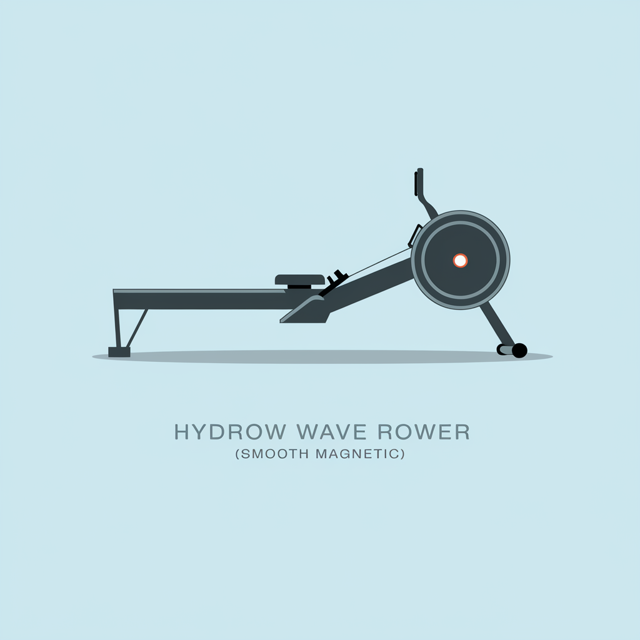
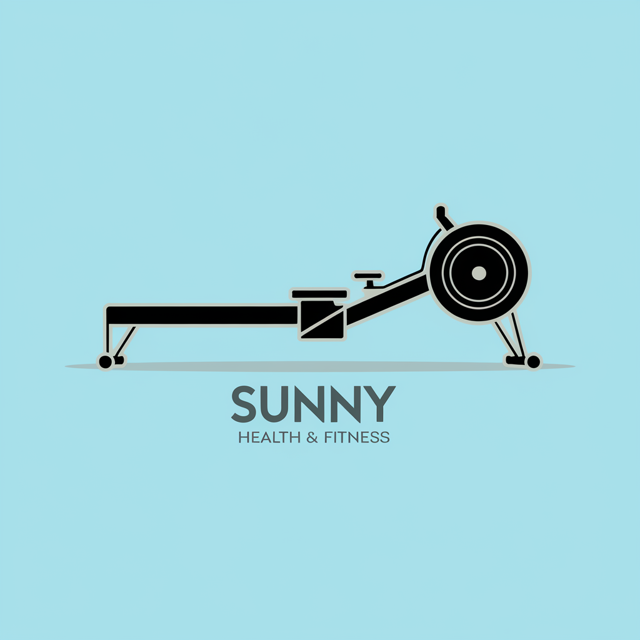
| Specification | Hydrow Wave Rower | Sunny Health & Fitness Magnetic Rowing Machine |
|---|---|---|
| Resistance Type | Electromagnetic, computer-controlled | Magnetic, 8 manual levels |
| Noise Level | Very quiet | Quiet |
| Dimensions | 80" x 19" x 43" | 82" x 19" x 23" |
| Stored Size | 26.5" x 30" x 82" (upright, kit required) | 37" x 19" x 53" (folds vertically) |
| Weight | 102 lbs | 60 lbs |
| Max User Weight | 375 lbs | 250 lbs |
| Screen | 16" HD touchscreen with 5,000+ workouts | Small LCD — time, strokes, calories |
| Seat Height | ~20 inches (easier to mount/dismount) | ~14 inches (low to ground) |
| Subscription | $44/month for full access | None required |
| Warranty | 5-year frame, 1-year parts | 3-year frame, 180-day parts |
What the Community Says
Hydrow Wave Rower
Electromagnetic resistance is the smoothest you'll find — no jerks, no catches, no surprises mid-stroke. Guided form coaching helps protect joints.
The $44/month subscription adds up fast. Without it, the machine is underwhelming in 'Just Row' mode.
People with chronic knee issues who need a smooth, guided, low-impact workout they'll actually stick with.
Sunny Health & Fitness Magnetic Rowing Machine
Under $400, dead silent, and folds into a closet. Gets you rowing without a serious financial commitment.
Low seat height is hard on stiff knees when getting on and off. Resistance can feel jerky between levels.
Budget-conscious buyers with mild knee sensitivity who want to try rowing before investing more.
Can You Row With Bad Knees?
Yes. And for most people with knee problems, it's one of the better things you can do. You're seated, your body weight isn't slamming through your joints, and the motion is smooth and controlled. The Arthritis Foundation recommends it. Physical therapists prescribe it. It works.
But you can absolutely make your knees worse on a rower if you do it wrong. Most articles about rowing and knee pain skip this part. They tell you rowing is "low impact" and leave it at that. The reality is more specific.
Dr. Sarah, known online as The Rowing Doc, breaks it down clearly. The three causes of knee pain on a rower are:
-
Over-compressing your knees at the catch. If you let the seat slide all the way forward until your knees are maximally bent, you're putting your joint in its weakest, most vulnerable position and then asking it to explode with power. The fix: shorten your stroke. Don't let your shins go past vertical.
-
Knees pushing out to the sides. This happens when you lack ankle mobility or have larger thighs. It shifts pressure to the outside of your knee. The fix: don't slide as far forward, and check that your weight is spread evenly across your feet, not rolling to the edges.
-
Over-extending at the finish. If your knees hyperextend (lock backward) at the end of each stroke, you're stressing ligaments instead of using muscles. The fix: keep a slight bend in your knees at full extension.
The rowing machine itself matters too. A jerky resistance mechanism — one that catches or surges during the stroke — transfers shock to your joints. Smooth, consistent resistance is non-negotiable when your knees are the limiting factor.
The Machine Matters Too
Seat Height (Everyone Ignores This)
If your knees are stiff, getting on and off a machine that sits 14 inches off the ground is a problem all by itself. Most budget rowers sit 14 inches off the floor. That's like getting in and out of a bean bag chair — fine if you're 25, miserable if your knees don't bend freely.
The Hydrow Wave sits at roughly 20 inches — closer to a normal chair height. Concept2 offers a tall-leg option at 20 inches for exactly this reason. The Better Knees Method, a physical therapy approach specifically for knee rehabilitation through rowing, explicitly recommends the Concept2 tall-leg version for people with limited knee flexion.
The Sunny magnetic rower sits low — around 14 inches. For someone with moderate to severe knee issues, this alone could be a dealbreaker.
Resistance Smoothness
This matters more for bad knees than most people realize. A jerky resistance mechanism sends shock through your joint at unpredictable moments. That's the last thing you want.
The Hydrow's electromagnetic resistance is computer-controlled. It adjusts fluidly through the stroke with zero catches. BarBend's Lauren Keary, a former collegiate rower, confirmed: "You won't experience any jerking or shaking of the pull cord during a Hydrow workout."
The Sunny uses a manual dial to move magnets. It works, it's quiet. But the transitions between levels can feel stepped, and some reviewers describe the magnets "clicking" into position. Probably fine for healthy knees. Less fine when your joint is already angry.
Guided Form vs. Going Solo
This is where the Hydrow's $44/month subscription actually earns its keep for knee pain sufferers. Bad form is the #1 cause of rowing-related knee pain. The Hydrow's instructor-led classes teach proper catch position, drive sequence (legs-core-arms, not all at once), and recovery pacing. Multiple instructors specifically address form modifications for people with limited mobility.
A Good Housekeeping tester who is also a combat-wounded veteran shared: "Now that the Hydrow Wave rower is a part of the family, I can take less time running and more time on the rower and still have the same results — and now saving my knees."
The Sunny rower has no coaching, no form guidance, and a basic LCD that doesn't even track distance. If you already know proper rowing technique, that's fine. If you're learning from scratch with bad knees, you're more likely to develop compensatory patterns that make things worse.
How to Row Safely With Knee Problems
Whether you buy either of these machines or something else entirely, these principles apply:
Start with 5 minutes. Not 20. Not 30. Five. Then wait 48-72 hours and see how your knees feel. The Better Knees Method channel emphasizes this: knee weakness shows up not during the activity, but 1-3 days later. If you feel fine after that first 5-minute session, add another session that week. Build to 2-3 sessions per week before increasing duration.
Keep the damper/resistance low. On the Hydrow, start at the default drag setting. On the Sunny, start at level 2-3. High resistance means more force through your knee joint per stroke. You can always add resistance later — you can't un-damage cartilage.
Shorten your stroke. Dark Horse Rowing's Shane Farmer, one of the most respected rowing coaches on YouTube, recommends "half slide" for people with knee pain — your seat only travels half the distance it normally would. This dramatically reduces knee compression at the catch while still giving you a full cardiovascular workout. You lose some leg drive but gain a pain-free session.
Control your stroke rate. Stay at 18-22 strokes per minute. Higher rates (28-32) make it harder to control your knee position at the catch, and you're more likely to slam into full compression before you realize it. Slow, controlled strokes let you own every inch of the movement.
Warm up off the machine first. The Arthritis Foundation specifically recommends 5 minutes of marching in place or a 10-minute walk before getting on a rower. Cold, stiff joints plus sudden exertion equals pain.
The Honest Comparison for Knee Pain
Who the Hydrow Wave Is For
Someone with diagnosed knee problems — arthritis, previous surgery, chronic pain — who needs a machine that won't make things worse and might actually help. The smooth electromagnetic resistance removes joint-jarring surprises from the equation. The guided classes teach form that protects joints. The higher seat makes getting on and off manageable. And the extensive library (5,000+ workouts including yoga and mobility sessions) means you can build a complete joint-friendly fitness routine around one machine.
The cost is real: $1,695 up front plus $44/month. Over two years, that's roughly $2,750. But if it keeps you moving and out of a surgeon's office, the ROI is hard to argue with.
Over 90% of Hydrow members are still active one year later. That retention stat matters more than any spec sheet when the whole point is consistency.
Who the Sunny Magnetic Rower Is For
Someone with mild knee sensitivity — not chronic pain, not post-surgical — who wants to try rowing as a low-impact alternative to running or cycling. At under $400, it's a low-risk way to test whether your knees tolerate rowing before committing real money.
The quiet operation is genuinely impressive. The folding design means it disappears when you're done. And the basic resistance is enough for light-to-moderate workouts.
But be honest about the limitations: the low seat will be tough on stiff knees. The lack of form coaching means you need to learn technique elsewhere (YouTube is your friend here — Dark Horse Rowing and The Rowing Doc are both free). And the 250 lb weight capacity is below industry standard, which rules it out for larger users.
The Verdict
If your knees are the reason you're looking at a rowing machine, this isn't a normal purchase. You're not buying a piece of exercise equipment — you're buying a way to stay active without pain. That changes the calculus.
The Hydrow Wave is the better machine for knee pain by a wide margin. The smooth resistance, guided coaching, higher seat, and overall build quality all directly address the things that make rowing risky for damaged knees. The subscription cost is a legitimate concern, but the alternative — a machine that teaches you bad habits or feels harsh on your joints — costs more in the long run.
The Sunny makes sense as a test. If you're not sure rowing will work for your knees, spending $400 to find out is reasonable. Use it for 2-3 months. Watch The Rowing Doc's knee modification videos. If rowing works for you, upgrade to something with smoother resistance and proper coaching. If it doesn't, you're out $400 instead of $1,700.
One middle-ground option worth mentioning: the Concept2 RowErg with tall legs ($1,155). It's the gold standard machine, the seat height is accessible, and the air resistance is smooth and self-regulating. No subscription required. The tradeoff is noise (not apartment-friendly) and no built-in coaching. But if you're willing to learn form from YouTube, it's arguably the best long-term value for a knee-conscious rower.
Watch: Rowing With Knee Pain — Expert Guidance
Shane Farmer from Dark Horse Rowing explains how rowing helps rebuild leg strength around damaged knees, and why it's often better than cycling for long-term knee health. Includes the single-leg rowing hack for post-surgery rehab.
Physical therapist Larry Kurtz-Kelly walks through three specific ways to protect your knees on a rowing machine, plus a safe progression plan from 5 minutes to full workouts.
Sources and Further Reading
- Dark Horse Rowing: 5 Ways Rowing Solves Knee Pain
- Better Knees: How to Help Your Knees with a Rowing Machine
- The Rowing Doc: Is a Rowing Machine Bad for Your Knees?
- Arthritis Foundation: Tips for Using a Rowing Machine Safely With Arthritis
- Hydrow: Is Rowing Good for Your Knees?
- Garage Gym Reviews: Hydrow Wave Review (2026)
- Good Housekeeping: Hydrow Rower Review (2025)
As an Amazon Associate I earn from qualifying purchases.
Follow Us
All Rights Reserved © 2026