



Concept2 RowErg vs MERACH Electromagnetic Rower: Which Is Better for Runners in 2026?
Updated: Mar 26, 2026
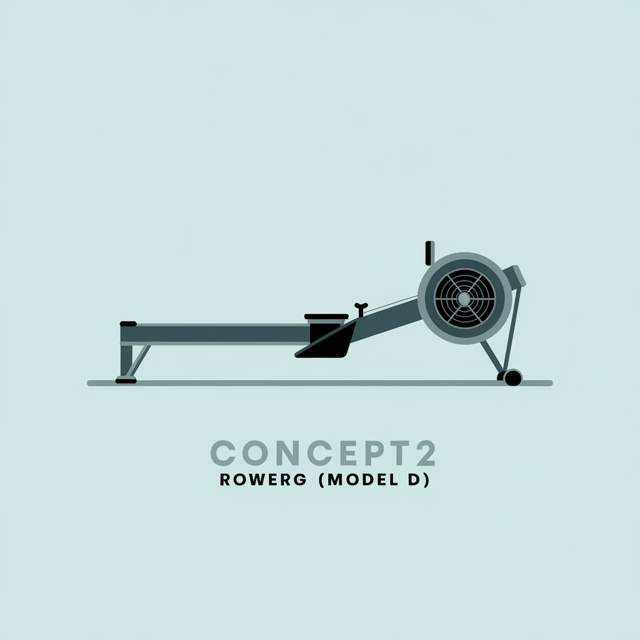
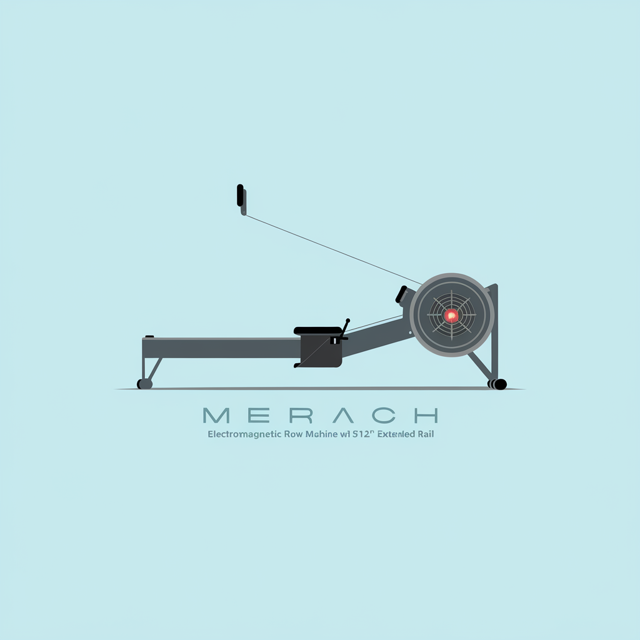
| Specification | Concept2 RowErg (Model D) | MERACH Electromagnetic Row Machine with 51.2" Extended Rail |
|---|---|---|
| Resistance Type | Air resistance, infinite scaling | Electromagnetic resistance, 16 levels |
| Noise Level | Moderate (rhythmic fan whoosh) | Very quiet (magnetic system) |
| Dimensions | 96" x 24" x 14" | 77.95" x 19.29" x 32.28" |
| Stored Size | 25" x 33" x 54" (splits in two, stores vertical) | 44.88" x 19.29" x 54.33" (folds vertically) |
| Weight | 57 lbs | 77 lbs |
| Max User Weight | 500 lbs | 350 lbs |
| Monitor | PM5 — splits, watts, stroke rate, HR, distance | Small LCD — auto-cycles through metrics |
| Connectivity | Bluetooth + ANT+ (ErgData, Strava, Zwift) | Bluetooth (MERACH app) |
| Subscription Required | No — $0/month | No — free app included |
| Warranty | 5-year frame, 2-year parts | 1-year limited |
What the Community Says
Concept2 RowErg (Model D)
Universally trusted data — your splits mean the same thing as an Olympic rower's. Tracks everything and syncs to Strava, Garmin, and every major fitness app.
The hard plastic seat gets painful after 30 minutes. Budget another $20 for a seat pad.
Runners who track their training, want reliable cross-training data, and plan to row for years.
MERACH Electromagnetic Row Machine with 51.2" Extended Rail
Whisper-quiet magnetic resistance and a genuinely comfortable seat. Smooth rowing feel for the price.
The monitor shows wildly inaccurate pace data. You can't track real progress or compare sessions.
Casual cross-trainers who want a quiet machine for occasional low-impact cardio.
Why Runners Are Getting on the Rower
Run long enough and something breaks. Knees, hips, shins, IT band. The repetitive impact adds up no matter how good your shoes are or how perfect your form is.
That's the pitch for rowing: same cardiovascular work, zero foot strikes. But it goes deeper than just being "low impact." Rowing targets the posterior chain (glutes, hamstrings, back) which is exactly the stuff distance runners neglect. Most runners have strong quads and weak everything else. A stronger back side means you hold form at mile 20 instead of collapsing into a shuffle.
Peloton Row instructor Alex Karwoski, a former college cross-country runner, put it simply: "I consistently feel like I'm helping my rowing or running while I'm doing the other. Using rowing as a cardiovascular complementary workout allows me to give my knees and other joints some time to recover while still giving me endurance training."
So rowing is a good idea. The question is which machine to buy. We spent a lot of time researching the Concept2 RowErg ($990) and the MERACH Electromagnetic Rower ($700) specifically through the lens of what a runner needs from a cross-training tool.
What the Running Community Actually Says
Reddit & Forum Consensus on Concept2
Go to any running or fitness subreddit and ask what rowing machine to buy. The answer is the same every time: Concept2. It's almost a meme at this point, but the consensus exists for a reason.
On the Slowtwitch triathlon forums, opinions are split on whether rowing improves running speed directly, but most agree it builds aerobic capacity without adding impact. One former University of Washington rower noted: "From my impressions, it is the fastest way to elevate your aerobic capacity, specifically because you are working so many diverse muscle groups."
A common thread in r/running and r/rowing: runners who replace one or two easy runs per week with 30-45 minute steady-state rows report fewer overuse injuries and faster recovery between hard sessions. The Concept2 specifically gets recommended because every workout metric — your 500m split, stroke rate, distance — is universally comparable. Your basement numbers mean the same thing as an Olympic athlete's training center numbers.
The recurring complaint? The plastic seat. After 30 minutes, it gets rough. Multiple users report going numb during longer sessions. The fix is a $20 seat pad, and most experienced users consider it a required accessory, not optional.
YouTube Reviewers on MERACH
The MERACH line has been getting attention from budget-focused YouTube reviewers. Training Tall did a thorough review and was genuinely impressed by the build quality for the price, but flagged a critical problem for anyone who takes training seriously:
"The monitor gives you numbers that are just really out of whack — 5 minute splits, 6 minute splits — you'll never see that even on a Concept2. If you want to gauge your numerical, metrical improvement with rowing over time, this is going to be hard."
RowAlong's John Steventon tested the MERACH R50 (air variant) with a SmartRow handle for independent measurement and found the built-in monitor was off by significant margins — showing a 2:20 pace when the actual force data showed 2:01. His verdict: "If you care about accurate data, racing, or performance tracking, this machine will frustrate you. If you just want to get fitter, sweat, and move, it might be good enough."
For a runner who tracks every mile, every split, every heart rate zone — that data accuracy problem is a dealbreaker.
Why Rowing Specifically (and Not Just Any Cross-Training)
Swimming and cycling are fine. But rowing does a few things they can't.
First, the energy demand translates almost 1:1. A 45-minute steady-state row at 18-22 strokes per minute hits the same aerobic system as a long easy run. One-minute all-out intervals on the erg feel like hill sprints. You can take your running training plan, swap "run" for "row," keep the same times and intensities, and it works. Try doing that on a bike. The effort levels don't map the same way.
Second, it fixes the imbalances running creates. Runner's World called rowing "the sneaky secret weapon for runners" because it builds core and back strength that running completely ignores. Every stroke works the muscles running skips.
Third, the breathing patterns carry over. The rhythmic catch-drive-finish-recover forces you to coordinate your breathing in a way that helps when you're gasping at mile 24 and trying to hold your form together.
How to Actually Integrate Rowing Into a Running Schedule
Based on what coaches and dual-sport athletes recommend:
- Moderate mileage runners (20-35 mi/week): Replace 1-2 easy runs with rowing sessions. A tempo row (4×8 minutes at 24-26 strokes/min with 2-min rest) substitutes for a tempo run. A 30-minute steady-state row replaces an easy recovery run.
- High mileage runners (40+ mi/week): Use rowing strictly for recovery and supplemental conditioning. Easy 20-30 minute rows on rest days to promote blood flow without impact.
- Injury-prone or returning runners: 2-3 rowing sessions per week in place of easy runs, plus 2-3 shorter runs focused on form. Rebuild mileage gradually while maintaining fitness on the erg.
The key insight from Peloton's Karwoski: match time, not distance. If your training plan calls for a 45-minute easy run, do 45 minutes on the rower at a comparable perceived effort. Don't try to convert running miles to rowing meters — it doesn't work that way.
Head-to-Head: What Runners Care About
Data You Can Actually Use
The Concept2 PM5 tracks 500m split time, watts, stroke rate, and distance. It pairs with heart rate monitors over Bluetooth and ANT+. Every session syncs to Strava, Garmin Connect, or the free ErgData app. If you already log your runs in Strava, your rowing sessions show up right alongside them. You can watch your cardiovascular fitness improve across both sports in one dashboard.
The MERACH has a small LCD that auto-cycles through metrics you can't control. The pace data is inaccurate (confirmed by multiple independent testers). You can't reliably compare today's row to last month's row. For someone who just wants to sweat, that's fine. For a runner who tracks weekly mileage and pace trends, it defeats the purpose of structured cross-training.
The Feel of the Stroke
Air resistance (Concept2) scales dynamically — pull harder, get more resistance. This mimics on-water rowing and, more importantly for runners, it mirrors how running works. Sprint harder, face more wind resistance. The damper setting (1-10) adjusts the "feel" without limiting intensity. Most runners find damper 4-5 comfortable.
Magnetic resistance (MERACH) is set at fixed levels. It's smooth and quiet, and the MERACH actually got praise for feeling better than most budget magnetic rowers. But it doesn't scale the same way. At the highest setting, experienced athletes can "rip through" the resistance. At lower settings, there's not much feedback. You lose that self-regulating intensity curve that makes air rowers great for interval training.
Noise (The Apartment Factor)
Real talk: the Concept2 is not quiet. The fan whoosh is rhythmic and some people find it meditative, but your roommate will hear it during 6am sessions. The MERACH is nearly silent — you could row while someone sleeps in the next room.
If you live in a studio apartment, the MERACH wins this category outright. If you have a garage, spare room, or basement, the Concept2's noise is a non-issue.
Longevity and Value
The Concept2 lasts basically forever. Machines from the 1990s are still in regular use. The powder-coated steel frame, nickel-plated chain, and simple mechanical design mean minimal maintenance — wipe the rail weekly, oil the chain monthly. The 5-year frame / 2-year parts warranty is solid, and replacement parts are available for everything. A used Concept2 still sells for $700-850.
The MERACH has a 1-year warranty covering manufacturing defects only. No long-term durability data exists because the product line is relatively new. At $700, it's cheaper upfront, but the effective cost per year could flip if it needs replacing in 3-4 years while a Concept2 runs for 20+.
The Verdict: For Runners, It's Not Close
The Concept2 RowErg is the right choice for runners who are serious about cross-training.
Here's why it comes down to one thing: data fidelity. Runners are metrics people. You track your pace, your heart rate zones, your weekly mileage, your race PRs. You need a rowing machine that speaks the same language — one where today's numbers mean something compared to last month's numbers.
The Concept2 gives you that. The MERACH doesn't. Everything else — the build quality, the community, the resale value, the 20-year lifespan — just reinforces the gap.
The MERACH makes sense if: you're a casual runner who wants occasional low-impact cardio, you live in a noise-sensitive apartment, or you're genuinely not sure you'll stick with rowing and want to test the waters for under $700 (Amazon's 30-day return helps here).
The Concept2 makes sense if: you run 20+ miles a week, you track your training data, you want a machine that grows with you, and you plan to use rowing as a legitimate part of your fitness program for years to come. Yes, the seat is uncomfortable — buy the $20 pad and move on. You're still under budget compared to the MERACH when you factor in the machine you'll actually keep using five years from now.
The Concept2 holds its value like a Toyota Tacoma. The MERACH? We'll have to wait and see.
Watch: Rowing for Runners — Expert Takes
Marathon runner and rowing instructor Katie Rosso Recker breaks down exactly how to translate your running workouts to the rower — including intensity matching, damper settings, and how to use rowing in-season vs off-season.
Training Tall's in-depth MERACH review covers the good (comfortable seat, quiet operation, decent resistance range) and the bad (unreliable monitor data, app crashes mid-workout).
Sources & Further Reading
- UCanRow2: Rowing for Runners — Cross Training with Katie Rosso Recker
- Training Tall: MERACH Rower Full Review (2024)
- RowAlong: MERACH R50 vs Concept2 — SmartRow Handle Comparison
- Garage Gym Reviews: Concept2 RowErg Review (2026)
- Runner's World: Best Indoor Rowing Machines for Cross-Training
- Peloton: Why Rowing Workouts Are the Perfect Complement to Running
- Slowtwitch Forum: Rowing as Cross-Training for Running
As an Amazon Associate I earn from qualifying purchases.
Follow Us
All Rights Reserved © 2026