


WaterRower vs Concept2 RowErg: The Real Differences in 2026
Updated: Mar 26, 2026
| Specification | WaterRower Natural (Oak) | Concept2 RowErg (Model D) |
|---|---|---|
| Resistance Type | Water resistance (enclosed tank) | Air resistance (flywheel + damper) |
| Noise Level | Quiet (rhythmic water swoosh, ~67 dB) | Moderate (fan whoosh, ~85 dB peak) |
| Dimensions | 82" x 21" x 22" | 96" x 24" x 14" |
| Stored Size | 22" x 82" upright (very stable) | 25" x 33" x 54" (splits in two) |
| Weight | 103 lbs (filled) | 57 lbs |
| Max User Weight | 700 lbs | 500 lbs |
| Monitor | S4 -- displays mph, not /500m splits | PM5 -- splits, watts, stroke rate, HR, distance |
| Drag Adjustment | Add/remove water from tank | Damper lever -- instant, mid-stroke |
| Subscription Required | No (optional Ergatta add-on $29/mo) | No -- $0/month |
| Warranty | 5-year frame, 3-year parts | 5-year frame, 2-year parts |
What the Community Says
WaterRower Natural (Oak)
Genuinely beautiful furniture-grade hardwood construction and remarkably quiet water resistance. Stores vertically with exceptional stability thanks to the filled water tank's low center of gravity.
The S4 monitor displays speed in mph rather than /500m splits. Your numbers aren't comparable to any standard in the rowing world, making structured training nearly impossible.
Design-conscious home owners who prioritize aesthetics and quiet operation, and whose training goals don't require industry-standard performance data.
Concept2 RowErg (Model D)
Universal performance data standard -- every split, every watt, every stroke rate is directly comparable across millions of rowers worldwide. No subscription, no electricity needed.
Air resistance at peak effort reaches ~85 dB (think vacuum cleaner). Not apartment-friendly, especially during early morning sessions.
Anyone who tracks workouts, trains for competitions, or wants the machine used at every World Indoor Rowing Championship since forever.
The Prettiest Rower vs. the Best Rower
This is the comparison between the machine you want to display in your living room and the machine that every competitive rower on earth actually uses. They're both excellent. But they're excellent at completely different things, and understanding that distinction will save you from an expensive mistake.
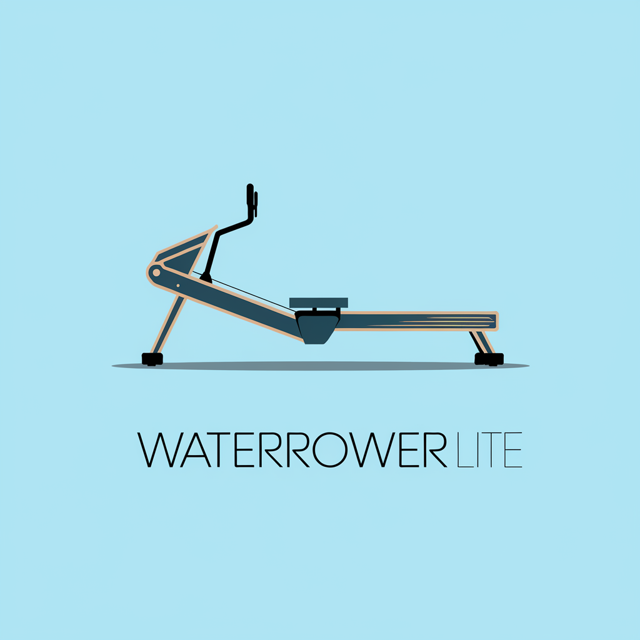
The WaterRower is a piece of furniture that happens to be a rowing machine. Handcrafted hardwood (ash, cherry, or walnut depending on the model), a water tank that produces a meditative swooshing rhythm, and a profile that looks intentional next to your bookshelf. It's the machine you buy when you care about how your home looks.
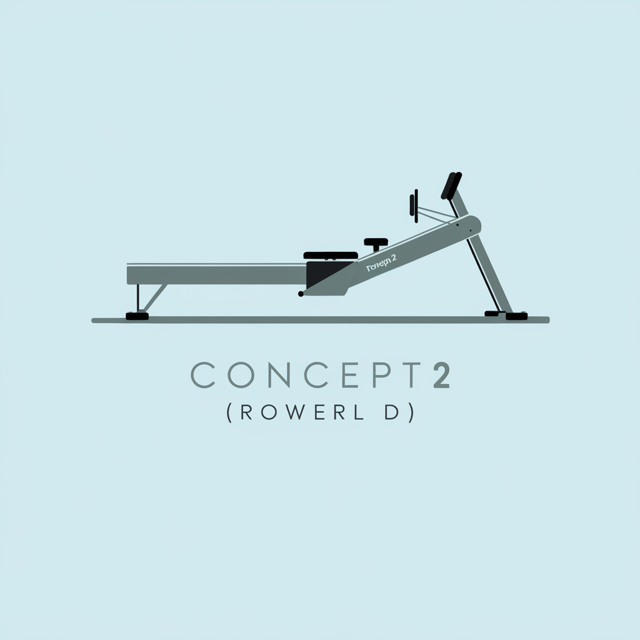
The Concept2 RowErg is gym equipment. Steel and aluminum frame, utilitarian design, powder-coated metal that screams "training facility." But behind that no-frills exterior sits the most accurate, most durable, most universally recognized indoor rower ever made.
The Monitor Problem Nobody Mentions in Quick Reviews
Here's the single most important difference between these machines, and most comparison articles bury it: the WaterRower's S4 monitor displays speed in miles per hour, not split per 500 meters.
That might sound like a minor formatting issue. It's not.
Every rowing metric in the world -- every World Indoor Rowing Championships result, every Concept2 online logbook entry, every CrossFit benchmark, every coaching program -- uses /500m splits. When someone says they pulled a "1:45 split," everyone in the rowing world knows exactly what that means and how it compares to every other rower on the planet.
Rowing Related's detailed comparison confirmed what experienced rowers already know: a 1:35 split on a Concept2 might register somewhere in the 1:20s on a WaterRower for equivalent effort. The numbers simply aren't comparable. If you want to track progress over time, compare yourself to friends, follow a structured training program, or enter any kind of online competition, this limitation is a dealbreaker.
If you just want to exercise and don't care about numerical tracking, it genuinely doesn't matter. But know what you're giving up.
How They Actually Feel to Row
This is where it gets counterintuitive. Water resistance feels more like real rowing to most beginners. The swoosh of water, the smooth pull, the natural deceleration -- it's intuitive and satisfying from the first stroke.
But technically? The Concept2's air flywheel more accurately replicates on-water rowing dynamics.
On real water, the hull accelerates during the drive and the handle feels progressively lighter through the back half of the stroke. The Concept2's air resistance recreates this natural acceleration curve. The WaterRower's resistance stays fairly constant through the stroke -- still pleasant, still smooth, but missing that dynamic feel that competitive rowers recognize immediately.
The Concept2's damper setting (1-10) adjusts the "heaviness" of the initial catch without limiting intensity. Most coaches recommend settings between 3-5, which mimics the feel of a typical racing shell. You can change it in two seconds, mid-session, with a simple lever.
Adjusting resistance on the WaterRower means adding or removing water from the tank. It works, but you're not doing it between intervals. You pick a water level and stick with it for the session.
Sound: The Reason WaterRowers Exist in Living Rooms
Let's be direct about this. The WaterRower is significantly quieter than the Concept2 in practice, and the type of noise matters as much as the volume.
Apartment Rowers measured the WaterRower at roughly 67.5 dB during normal use -- about the volume of moderate conversation, with a rhythmic water slosh that most people describe as pleasant or even soothing. Test subjects actually preferred the WaterRower's noise profile over mechanical sounds by a 72% margin, even when absolute volume levels were similar.
The Concept2 hits 74 dB at moderate intensity and can peak at 85-90 dB during all-out efforts. That's air-fan noise -- a consistent, mechanical whoosh. Not unpleasant, but clearly "exercise equipment" and audible through walls. More critically, the steel rear legs transmit low-frequency vibration through floors. If you have downstairs neighbors, they'll feel it before they hear it.
The practical result: the WaterRower opens up a usage window from about 8am to 9pm in most apartments. The water noise can actually register as "white noise" to neighbors -- like rain on a window. The Concept2's safe window shrinks to 9am-8pm without a sound mat, or 7am-8pm with one.
Build Quality and What Happens in Year Five
The Concept2 has an almost unfair advantage here because it's been around forever. Literally -- machines from the 1990s are still in daily use at rowing clubs worldwide. The frame is utilitarian but indestructible. Replacement parts for everything (chain, handle, seat, rollers, monitor) are readily available and cheap. Maintenance is minimal: wipe the rail, oil the chain every few months.
Resale is exceptional. A 10-year-old Concept2 in good condition sells quickly for $700-850. That kind of value retention is basically unheard of in fitness equipment.
The WaterRower has solid craftsmanship -- the handmade hardwood frames are genuinely impressive -- but there's a relevant development worth noting. WaterRower was acquired by Life Fitness in 2023. As of early 2026, the product line appears unchanged and customer service continues operating. But any time a company changes hands, questions about long-term parts availability and product direction are worth considering.
Maintenance on the WaterRower is slightly more involved. You need to add purification tablets to the water tank periodically to prevent algae growth. It's not a huge deal, but it is ongoing maintenance that the Concept2 doesn't require.
The standard WaterRower's dual-rail design has a quirk worth knowing about: the footplate sits between the rails, restricting its width and positioning the feet higher relative to the seat. For taller or broader rowers, this can feel cramped. The WaterRower A1 model uses a monorail design (similar to the Concept2) and is genuinely the better rowing platform if you're committed to the WaterRower brand.
Storage and Space
The WaterRower stores vertically against a wall with exceptional stability. That filled water tank creates a low center of gravity that makes the upright position feel rock-solid. At 82 inches long, it's 14 inches shorter than the Concept2 during use. The 22-inch width is the narrowest in the premium rower category.
The Concept2 at 96 inches is a longer machine, but it compensates with the best storage trick in the business: tool-free separation into two pieces. Pop the framelock, split the rail from the flywheel housing, and you have two manageable pieces that fit in a closet. At 57 pounds total, one person handles this easily. In practical testing, the Concept2's split-and-store workflow consistently took under 45 seconds.
The Hydrow, by comparison, requires a separate storage kit and a two-person team. Both the WaterRower and Concept2 win here, just in different ways.
The Ergatta Option (Worth Mentioning)
If you love the WaterRower hardware but want better training features, the Ergatta integration is worth a look. It replaces the basic S4 monitor with a touchscreen that gamifies your workouts -- think competitive races, calibrated intervals, and progress tracking. It runs $29/month on top of the WaterRower cost.
The Concept2 has its own version of this: the Ergatta Connection Kit ($24/month) plugs into the RowErg and provides the same gamified experience on the more accurate hardware. It's actually a strong argument for the Concept2 -- you get the best rowing platform with optional gamification for less money.
The Verdict
Buy the WaterRower if you genuinely care about how your home looks, if quiet operation is a hard requirement, or if the water resistance feel appeals to you more than raw data. It's a beautifully made machine that will make you feel good about having exercise equipment in your living space. Just understand that you're trading performance tracking for aesthetics.
Buy the Concept2 if you care about knowing whether you're getting fitter. The PM5 data is in a different league from the S4 monitor, the resale value is unmatched, the durability is proven across decades, and you're not locked into subscriptions or dependent on electricity. For $990 with no ongoing costs, it's the best value in home fitness equipment, period.
For the undecided: the Concept2 with a tablet mount and a $20-30/month app subscription (Ergatta, Hydrow app, or even free YouTube rowing workouts) gives you the best of both worlds. You lose the WaterRower's looks, but you gain accuracy, durability, and flexibility that the WaterRower can't match.
Treadmill Review Guru covers the hands-on differences in build, feel, and storage between these two premium rower categories.
As an Amazon Associate I earn from qualifying purchases.
Follow Us
All Rights Reserved © 2026